
NAVER Search Transformation: A Strategy for Digital Marketers in 2026
Google’s E-E-A-T and NAVER’s AuthGR emphasise expertise, trust and user value as AI-generated content expands. Explore the implications for content and SEO.
💡 Google and NAVER both emphasise trustworthy, expert content as AI-generated material grows. This article compares Google’s E-E-A-T approach with NAVER’s LLM-based AuthGR and considers how customer value, originality and problem-solving can guide digital marketing in 2026.
For content marketers and SEO specialists, 2026 represents a significant transition. NAVER’s Next N Search changes how credibility is evaluated, making a review of established strategies necessary. This article analyses those changes and practical responses for long-term brand development.
What Is Next N Search?#
NAVER began progressively introducing Next N Search in late 2025, prioritising credibility across collection, indexing and ranking. Its elements include AI Briefing, neural matching, integrated document ranking and AuthGR.
AuthGR uses large language models to assess document sources and author credibility, shifting emphasis from view counts towards who created the content. The article describes QUMA-VL as examining consistency between text and images: unrelated landscape photographs in an interior design article, for example, can weaken quality assessment.
RCON—Reranking with Context—interprets query context and reorganises results. A search for “IU” may be divided into sub-intents such as concerts and new music, with promotional content moved down. NAVER’s KRW 100 billion investment in knowledge infrastructure and stronger spam filtering supports Korean-language content development. The article cites A/B-test gains of 1.93% in time spent and 1.34% in CTR, alongside greater visibility for official documents and specialist creators and reduced traffic for some general blogs.
For marketers, the implication is a move beyond maximising views towards credibility and expertise.
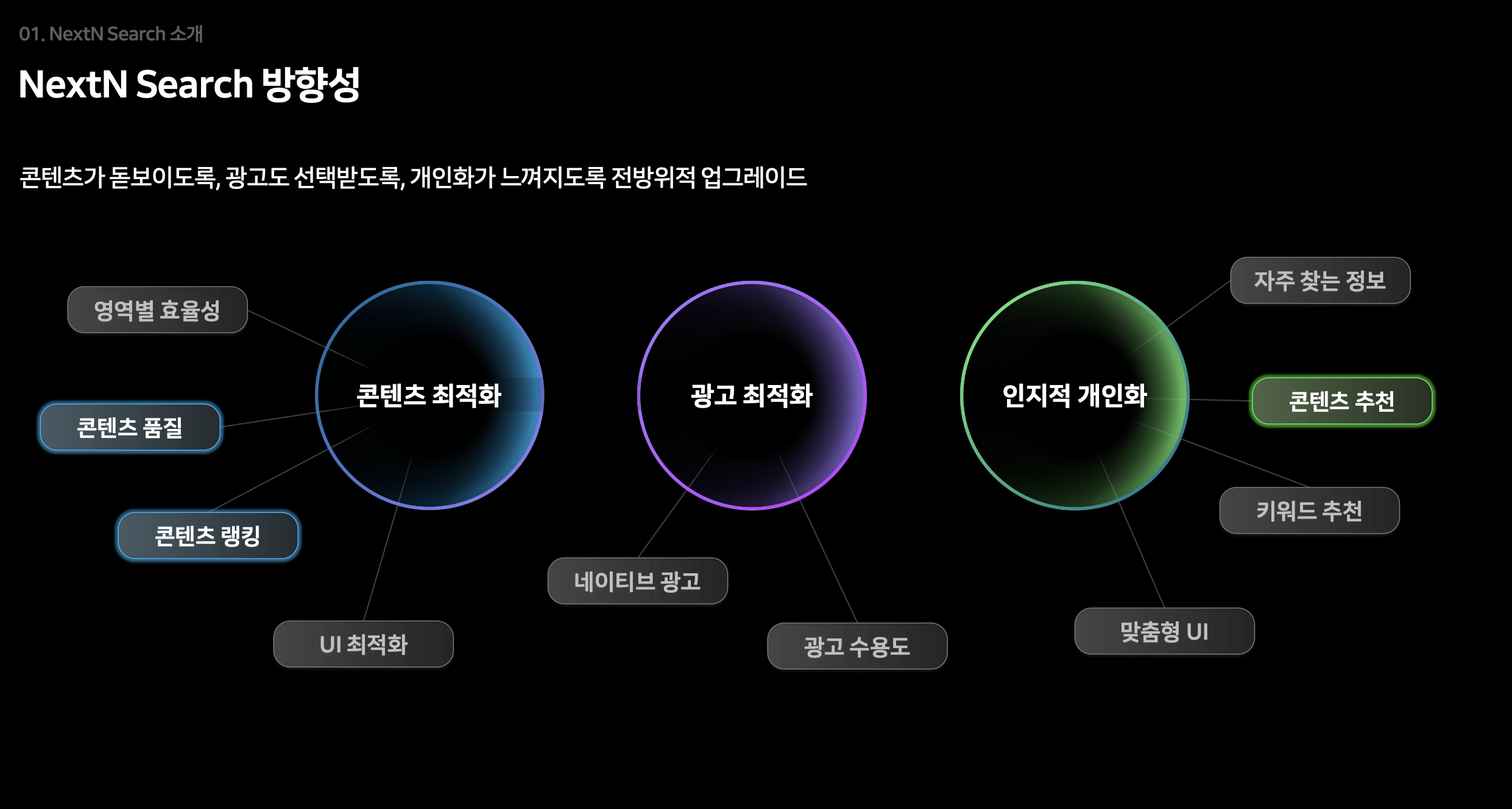
Source: NAVER DAN25, “Next N Search: NAVER’s Continually Evolving Search”
Essential Considerations for NAVER SEO#
With E-A-T principles, AuthGR and QUMA-VL in the article’s analysis, consider:
- Credible sources and authors: Build expertise around a sustained topic. Keyword stuffing and low-quality automated content carry risk. Strengthen author profiles and evidence of experience.
- Text–image consistency: Connect images, captions and text. Unrelated visuals undermine coherent multimodal content.
- Search intent: Address long-tail queries and specific informational or purchase intents. Prioritise value over overtly promotional content.
- Mobile and multimedia: Make content fast and usable within NAVER’s app-led environment, with relevant images and video. Update it regularly as freshness and user feedback matter.
- Track changes: Monitor official updates and test results during rollout. Specialist creators may benefit while broad, unfocused blogs risk losing substantial traffic.
Short-term traffic chasing can harm brand development. Invest in durable trust instead.
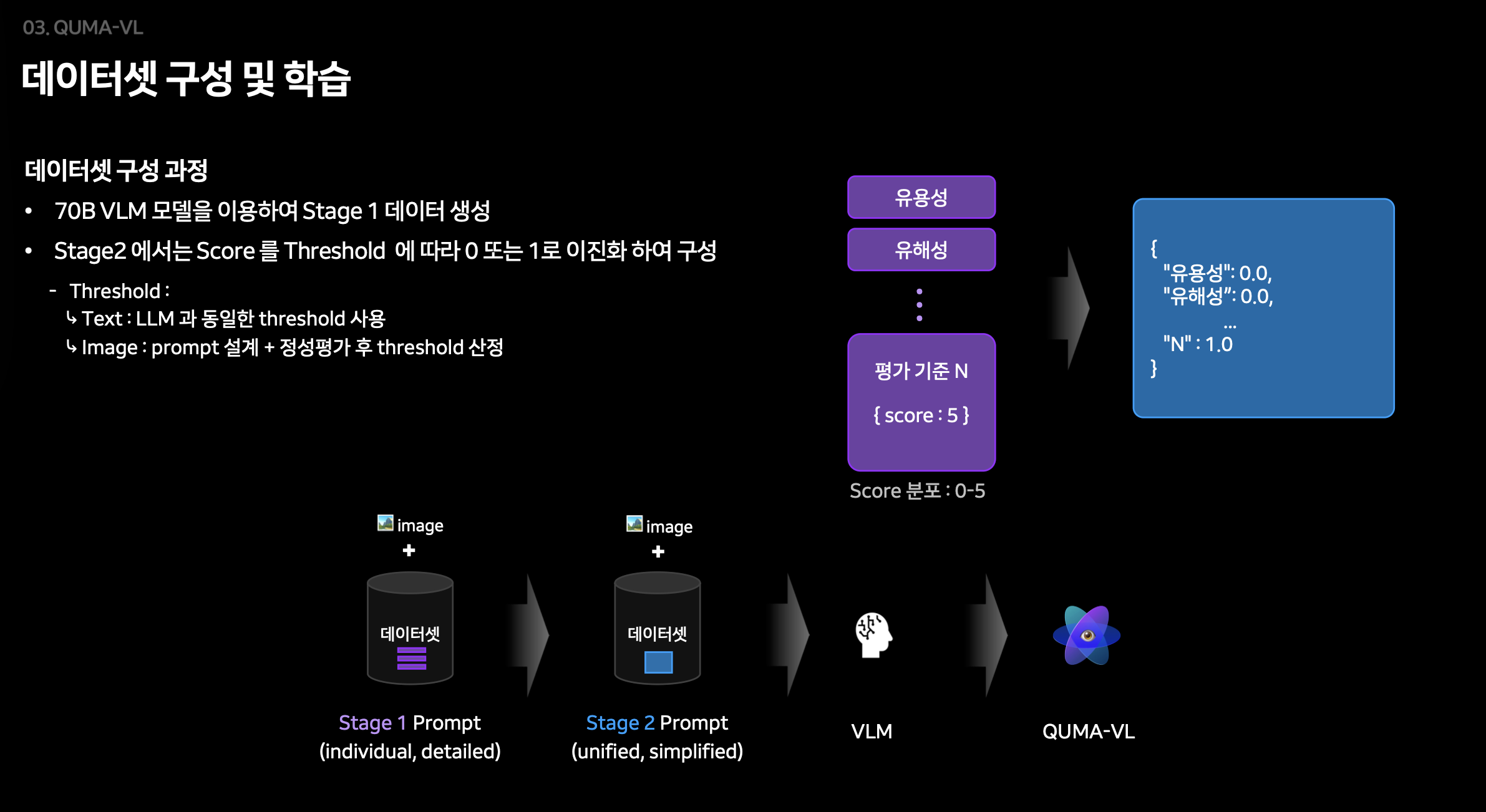
Source: NAVER DAN25, “Next N Search: QUMA-VL Dataset Construction and Training”
Content Types to Strengthen: Quality Generates Traffic#
Next N Search places greater emphasis on credible knowledge content. Develop:
- Specialist knowledge: In-depth guides and cases in a defined field, supported by sustained series such as a 2026 digital marketing outlook.
- Practical problem-solving: How-to guides and comparisons that address sub-intents, with clear sources and current information.
- Consistent multimodal content: Infographics and videos whose visuals, captions and data match the text.
- Local and Korean-language relevance: Reflect culture and local trends; use human review to add originality to AI-assisted content.
- Links to official, credible sources: Use authoritative data and references to support trust and potential AI Briefing citation.
These formats support differentiation as low-quality material becomes less competitive.
Practical Search Strategies for 2026#
- Audit and reorganise content: Review credibility and text–image alignment, focus on expertise and examine queries and traffic in NAVER Webmaster tools.
- Test AI experiences: Observe how AI Briefing summarises the brand and how results are organised. Clear headings and bullet points can make source material easier to interpret.
- Optimise with data: Review time spent and CTR, test changes and track sustained expertise development.
- Strengthen partnerships: Collaborate with experts and relevant communities, including NAVER Knowledge iN, to build credible connections.
- Create a long-term roadmap: Allocate resources to quality and AI-assisted workflows while updating content consistently.
These measures aim to build stable acquisition and brand trust.
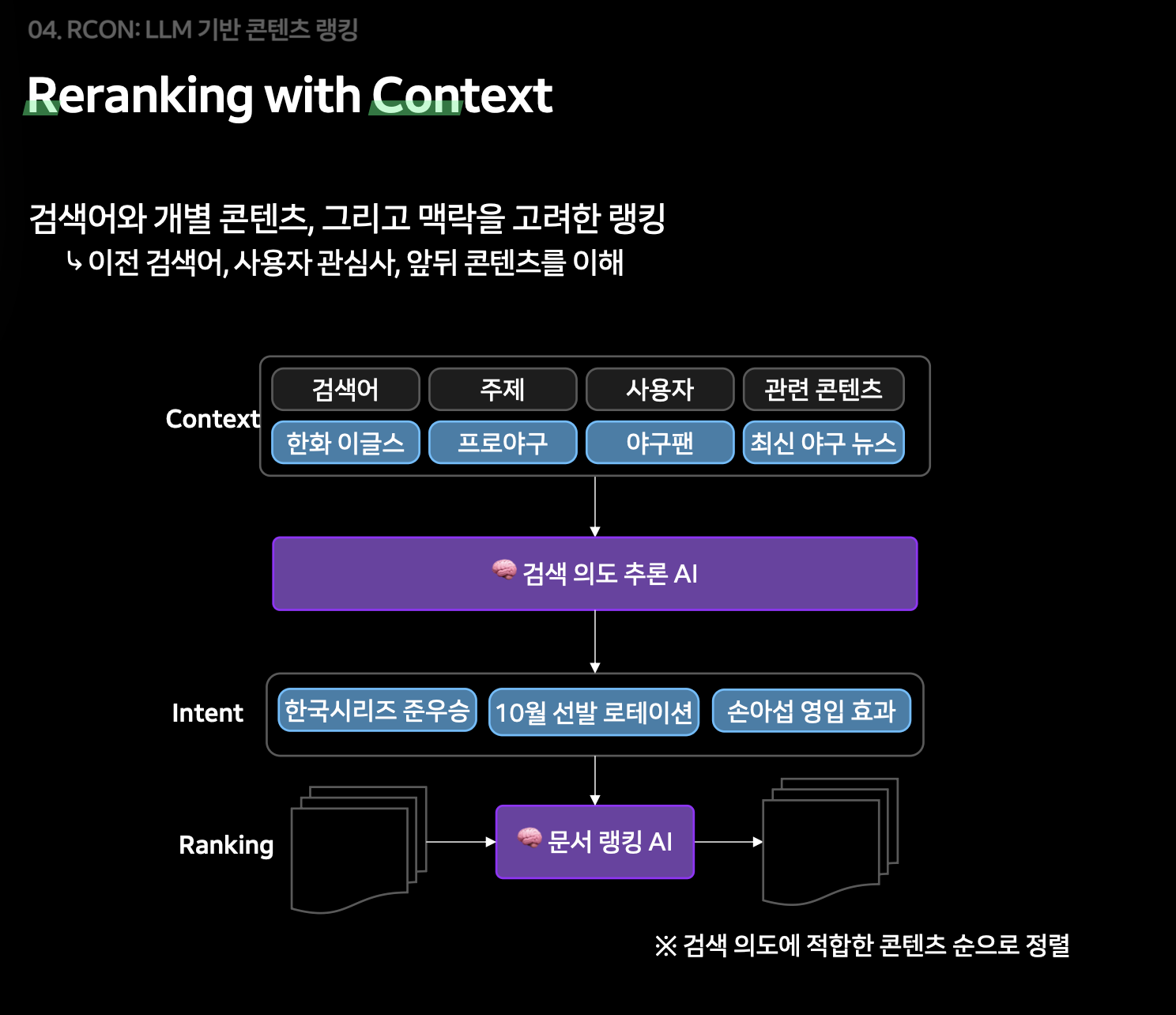
Source: NAVER DAN25, “Next N Search: Reranking with Context”
AuthGR: How the Article Describes NAVER’s Core AI Technology#
AuthGR—Authority-aware Generative Retriever uses LLMs to assess document credibility, placing author expertise and reliable sources ahead of view counts. The article describes a shift from retrieving relevant documents towards generative retrieval centred on credible documents.
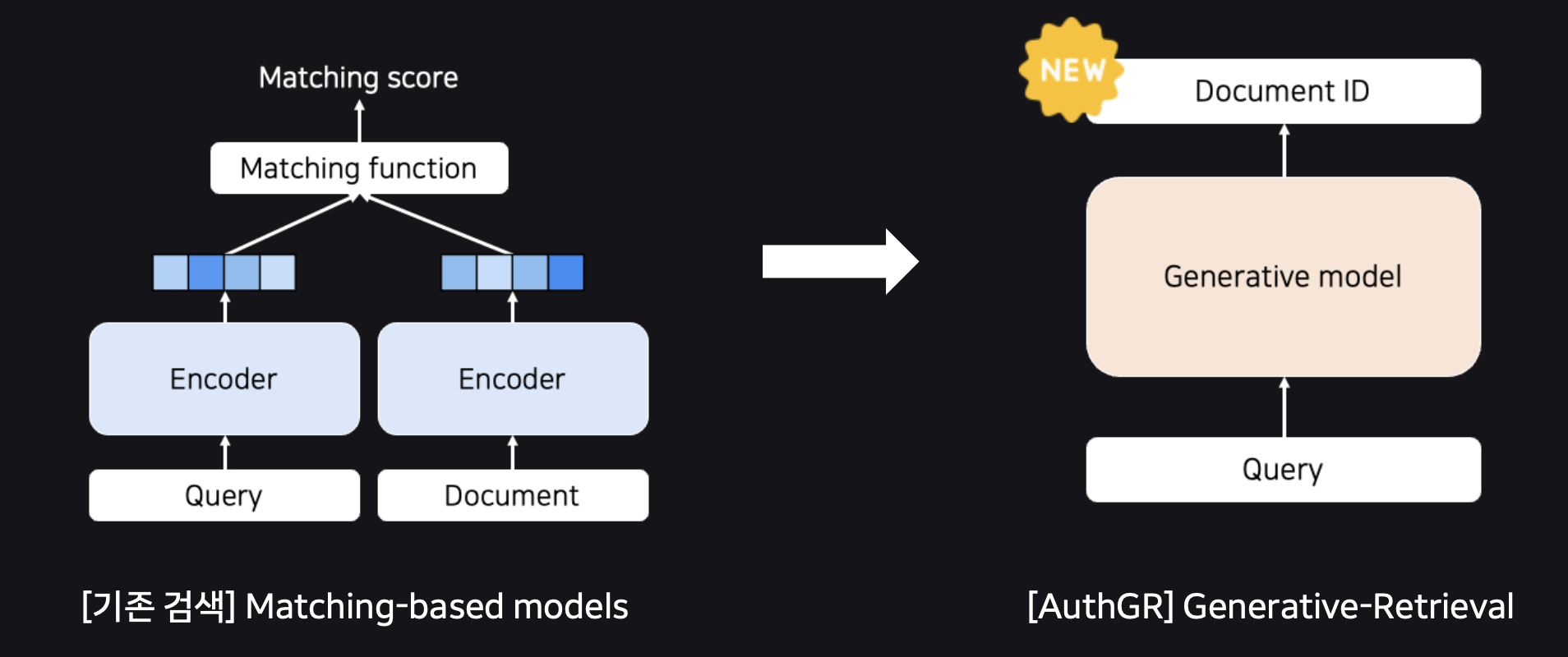
AuthGR: Authority-aware Generative Retriever
Search organised around credible documents: Authority-aware Generative Retriever.
Key Mechanisms#
LLM-based assessment places emphasis on authorship, sustained quality within a topic and E-A-T principles.
- Low-quality filtering: detects automated spam and reduces its visibility.
- Ranking effects: promotes credible documents and demotes less credible ones.
- Integration: applies across the search process, with the cited A/B tests reporting 1.93% longer time spent and 1.34% higher CTR.
The approach responds to rapidly expanding AI content. Specialist creators may benefit, while low-quality blogs face risks. Internal algorithms are not public; the article describes combined assessment of author history and user feedback.
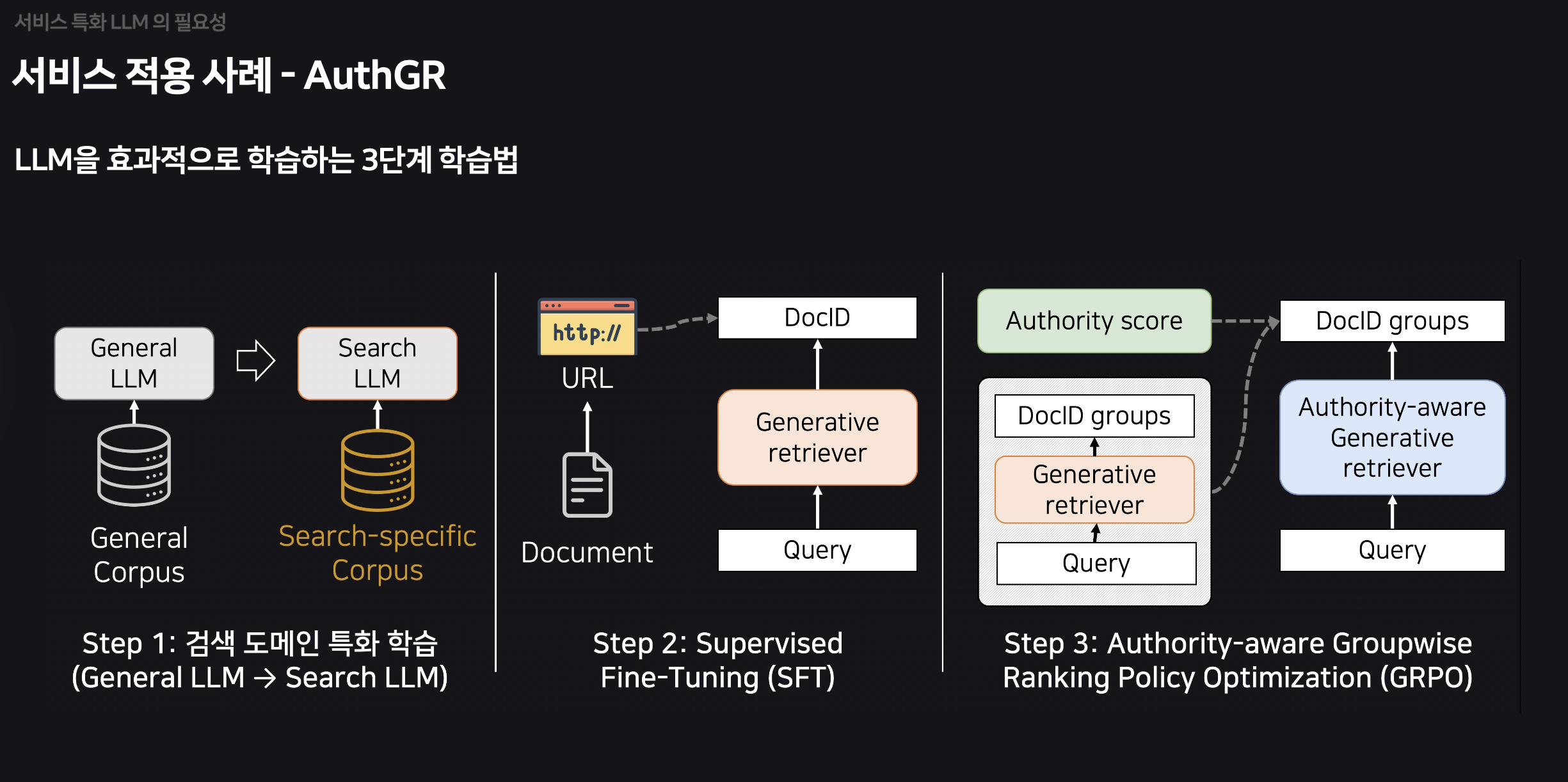
Source: NAVER DAN25, “Building an LLM Optimised for Search Services: AuthGR Three-Stage Training”
SEO Insights from Comparing Google E-E-A-T and NAVER AuthGR#
Google’s E-E-A-T covers Experience, Expertise, Authoritativeness and Trustworthiness. The article positions NAVER’s AuthGR as an AI-based approach with similar concerns but different implementation.
1. Concepts and Objectives#
- Google E-E-A-T: people-first evaluation, particularly for YMYL topics, with indirect influence on ranking.
- NAVER AuthGR: a shift from views to expertise, AI spam filtering and ranking effects.
- Shared emphasis: reliable, expert information and user value, rather than factual errors or duplicate, low-quality automated content.
- Differences: human assessment and global reach on Google; AI automation and Korean-market context on NAVER.
2. Comparing the Elements#
| Element | Google E-E-A-T | NAVER AuthGR | Comparison in the Article |
|---|---|---|---|
| Experience | First-hand experience | Long-term history | Human evidence vs AI analysis |
| Expertise | Demonstrated specialist knowledge | LLM evaluation | About-page evidence vs history analysis |
| Authoritativeness | Backlink emphasis | Official-source links | Global vs local emphasis |
| Trustworthiness | Transparency | Spam filtering | Trust-building, with automated demotion on NAVER |
3. SEO Implications#
- Google: strengthen original content and credible links.
- NAVER: develop sustained expertise and multimodal consistency.
- Common ground: prioritise user value.
- Different scope: global web optimisation versus NAVER’s platform environment.
4. Content Marketing in the AI Search Era#
The article sees a shared direction: addressing search-quality deterioration caused by low-quality AI content. It interprets Google’s December 2025 core update and NAVER’s AuthGR as responses to this problem.
The central implication is a change in production priorities. Randomly generated content at scale cannot substitute for human expertise, originality and trust. Marketers should prioritise long-term branding and customer value over short-term visits.
NAVER’s changes bring both risk and opportunity. Build a trust-centred strategy for 2026. A single article is no longer enough: brands need a strategy across the entire Search Ecosystem .